

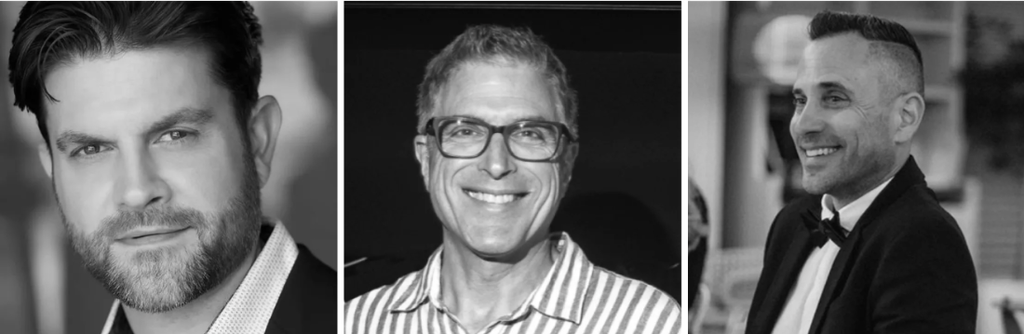
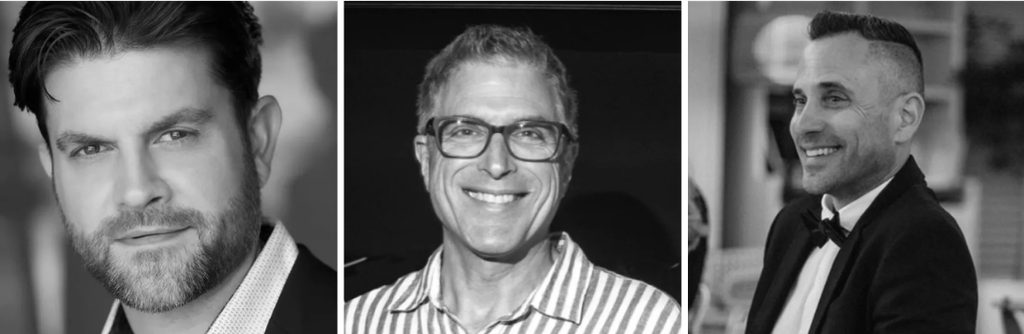
Founded by Marc Benjamin, Kristofer McNeeley and Mark Harris, Polaris is developing an initial three-film slate alongside a modern, technology-forward production model
The company’s growing Oklahoma presence will be on display at the inaugural Black Wall Street Nation Film Summit, September 25-27 in Tulsa
At a moment of rapid change across the film industry, Polaris Films is building an independent production company around a straightforward idea: make compelling, character-driven films for broad audiences, and build the business underneath them to keep making more.
Founded by media entrepreneur Marc Benjamin, producer Kristofer McNeeley, and writer, producer and development executive Mark Harris, Polaris is developing an initial three-film slate generally targeting productions in the $2 million to $4 million range, with Oklahoma becoming an increasingly important part of both its production strategy and long-term vision. The company brings together three complementary backgrounds across business, creative development, production and distribution, with a model built around disciplined budgets, strategic use of incentives, emerging production technology and a repeatable pipeline rather than one film at a time.
“We’re thinking about stories that anyone can see themselves in,” says Benjamin. “We want to make films people actively want to see, built around characters who surprise us and stories that leave audiences with something to talk about afterward. The creative side matters deeply, but every decision also has to make sense as a business. We’re building a company that can do both.”
The approach grew out of a broader idea Benjamin had been exploring across various formats through Polaris Media Lab: what role can entertainment play in a culture increasingly divided by algorithms, outrage and media bubbles? Rather than answer that question through overtly message-driven content, Polaris gravitated toward something simpler – make good movies, tell human stories, and create characters who resist easy stereotypes while giving audiences room to find their own way into the material.
The creative reference points are enduring films such as The Shawshank Redemption, Stand by Me and Terms of Endearment, stories built around people, relationships and difficult choices rather than spectacle. Polaris is interested in that emotional accessibility while developing films for the economics and viewing habits of the current market, where original and lower-budget genre films have continued to demonstrate audience demand even as major studios reassess the economics of larger productions.
That philosophy is matched by what Polaris describes as a founder-driven rather than filmmaker-driven model. Benjamin, McNeeley and Harris are approaching the slate as people building a company and a repeatable business, each bringing a distinct discipline to the table.
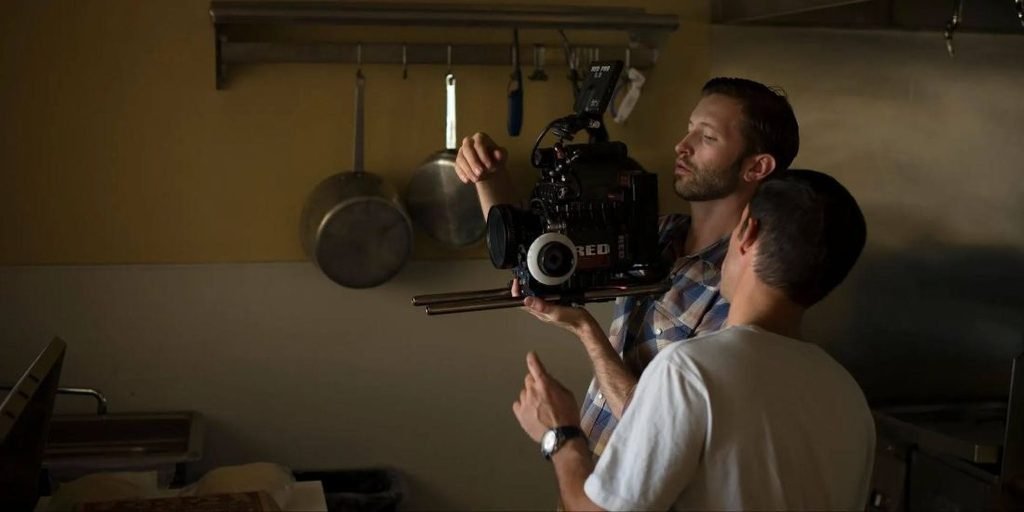
Benjamin brings two decades of profitable company-building experience as founder and CEO of Convergence Point Media, where he has maintained 20 consecutive years of profitability. Harris leads much of the creative development, drawing on a background in screenwriting, producing and development to identify projects, strengthen material, attach talent and explore how emerging technology can expand what independent filmmakers can accomplish. McNeeley brings extensive production experience, having produced more than 70 feature films over roughly a decade with an exceptional record of profitability, including several of Hallmark’s most-watched films. He also brings a deep network of industry relationships spanning production, buyers and distribution, helping Polaris think about how projects reach the market from the earliest stages of development.
Together, the founders are building Polaris around a repeatable path from development and financing through production, distribution and the next project. Instead of raising, producing and dismantling the infrastructure around a single film each time, the company is developing a slate model in which relationships, production resources, financing and eventual proceeds can carry forward from one project into the next.
Its first two planned features reflect the range within that creative thesis. Blackbird, written and produced by breakout filmmaker JT Mollner – whose recent credits include Strange Darling and the Stephen King adaptation The Long Walk – is an intimate mother-daughter road film that deals with end-of-life, family and the emotional tension between protecting someone and respecting their wishes, while Shimmer, adapted from John O’Keefe’s acclaimed play, follows a 14-year-old Black boy sent to an Iowa juvenile detention center in 1971 who discovers an otherworldly means of escape while trying to survive the institution and find his mother.
Polaris has intentionally left the third position in its initial slate open, with an eye toward potentially identifying a project through the filmmakers and communities it is meeting in Oklahoma. The company is also considering Affliction, a psychological horror film written by Harris and Monica Foley that explores isolation, paranoia, memory and mental health. The project is being developed around a hybrid production model combining practical elements, virtual environments and other emerging tools – an approach suited to Oklahoma production resources such as the virtual-production stage at Cherokee Film Studios. Bartlesville.
Outside its own slate, Benjamin and Harris are both attached as executive producers to an upcoming documentary short from two-time Academy Award-winning filmmaker Sam Davis, with Polaris collaborating on the project.
BUILDING OKLAHOMA’S NEXT FILM ECONOMY
Oklahoma has gradually become central to the larger Polaris story. The state has spent recent years attracting major productions through competitive incentives while developing crews, facilities and a growing film community, but Polaris sees an opportunity to help create greater consistency between isolated independent films and large studio productions that arrive, absorb much of the available workforce for several months, and then leave.
“Oklahoma already has strong incentives, talented people and a remarkable creative culture,” Benjamin says. “The opportunity now is consistency. A sustainable film economy needs crews who know there is another job coming, training that leads to actual work and production companies with reasons to keep returning. That aligns directly with the kind of business we’re trying to build.”
The company is developing relationships across the state as it explores a production infrastructure designed around smaller, repeatable projects and rapidly evolving technology. Its relationship with Buffalo Roam Studios in Bartlesville adds production and technical capabilities that could support technology-forward projects such as Affliction. Polaris also has a direct connection to Vancouver-based Studio BRB, where McNeeley is an owner, giving the company access to an established production operation and network. Together, these relationships expand Polaris’s immediate production reach and create opportunities to support and scale projects across their respective markets.
REIMAGINING THE FILMMAKING WORKFLOW
Those conversations are unfolding as the definition of a film studio itself is changing. Harris has become deeply engaged in virtual production and the ethical use of generative tools across development and production, with an emphasis on practical applications that can reduce cost, compress schedules and increase production value without removing human creativity from the process.
For Polaris, that means human actors and human authorship remain central while technology supports the work around them. Real locations can be captured and extended virtually, volume-wall production can reduce travel and location costs, virtual environments can replace expensive builds, and AI-supported tools can assist with planning, logistics and development.
“The goal isn’t to make AI films,” Benjamin says. “It’s to use the best tools available to make better films more efficiently while keeping people at the center of the process. If technology allows an independent production to put significantly more value on the screen without sacrificing authenticity, that’s something we should be exploring.”
A NEW PUBLIC PLATFORM
That broader Oklahoma vision will have an early public platform this September through Black Wall Street Nation, the cultural initiative Benjamin co-founded with Tulsa educator and community builder Lincoln Cochran. The inaugural Black Wall Street Nation Experience, taking place September 25-27 in Tulsa, is rooted in Greenwood’s history of entrepreneurship, creativity, ownership and reinvestment, with programming designed to turn those ideas toward present-day opportunity.
At the center of the weekend is the Black Wall Street Nation Film Summit at OSU-Tulsa, bringing together filmmakers, producers, investors, educators, film commissioners and other stakeholders around the future of Oklahoma production. The Summit will combine industry conversations with hands-on pathways including a writers’ room lab, film makeup training and programming around NIL and financial literacy for student athletes, alongside discussions focused on production, workforce development, live music headliners and film screenings.
For Benjamin, the connection between Black Wall Street Nation and Polaris is a natural one. Both are built around the idea that lasting creative economies require ownership, access, infrastructure and opportunities that continue after any single event or production ends.
The Summit also provides a forum for a larger question Polaris expects to keep exploring as its slate moves toward production: what would it take for Oklahoma to become a genuine center of gravity for independent filmmaking?
“We’re still early, and that’s what makes this moment interesting,” says Benjamin. “The industry is changing quickly enough that some of the assumptions we made a year ago about budgets, infrastructure and how films need to be produced have already changed. Oklahoma has an opportunity to build into that future rather than retrofit an old model. We want to be part of that.”
ABOUT POLARIS FILMS
Polaris Films is an independent film company founded by media entrepreneur Marc Benjamin, producer Kristofer McNeeley, and writer, producer and development executive Mark Harris. The company develops character-driven films designed for broad audiences, combining creative ambition with disciplined production economics and a growing focus on Oklahoma. Polaris is developing an initial three-film slate alongside a modern production model incorporating regional incentives, virtual production and ethically used emerging technology. Polaris Films is part of Polaris Media Lab, Benjamin’s media and entertainment company built around storytelling that can reach across cultural and demographic divides.
https://main.polarismedialab.com/