

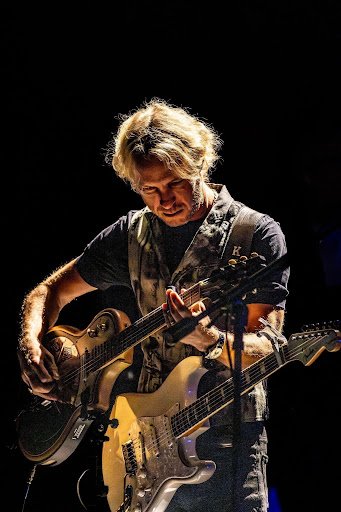
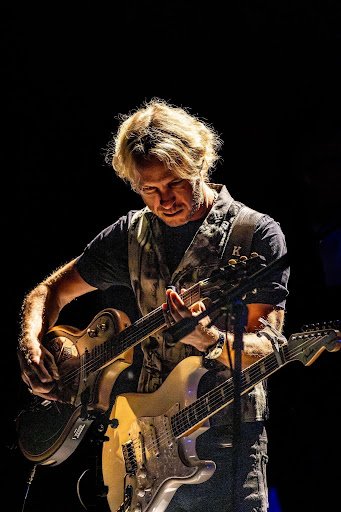
Anniversary re-recordings can go a few different ways. Some artists radically reinvent old material to justify revisiting it. Others recreate albums so faithfully that the exercise feels unnecessary after a few songs. Kenny Wayne Shepherd’s Ledbetter Heights (The 30th Anniversary Sessions) lands somewhere in between. It respects the spirit of the 1995 original while allowing enough space for age, experience, and perspective to naturally reshape the music.
That balance becomes clear immediately on “Born With A Broken Heart.” The original version carried the urgency of a teenage guitarist determined to prove himself. Thirty years later, the song feels steadier and heavier without losing its edge. Shepherd’s guitar work remains fiery, but there’s noticeably more patience in the phrasing now. He lets the songs breathe in ways he probably wouldn’t have at 18.
That sense of restraint ends up being one of the album’s strongest qualities. Shepherd has spent three decades building a career as one of modern blues-rock’s most dependable touring artists, and these recordings reflect someone comfortable enough with his musicianship to stop chasing every moment quite so aggressively. Tracks like “One Foot on the Path” and “Aberdeen” still hit hard, but they’re less concerned with sheer speed and more interested in atmosphere and groove.
The production helps enormously. Co-produced with Jerry Harrison, the album avoids the overly polished sound that can flatten blues records recorded in the digital era. There’s warmth throughout the sessions, especially in the rhythm section work from longtime collaborator Chris Layton, whose drumming continues to anchor Shepherd’s music with a loose but deeply controlled feel.
The biggest departure comes on “Riverside,” which trades some of the original version’s youthful energy for something smokier and more reflective. It’s one of the few moments where Shepherd substantially rethinks the material instead of refining it, and the risk pays off. The slower arrangement suits where his playing is emotionally these days.
What stands out most across the album is how naturally Shepherd still inhabits this material. Plenty of artists revisit early work and unintentionally expose its limitations. Ledbetter Heights largely holds up because the songwriting itself was unusually strong from the beginning. Even at 16, Shepherd understood hooks, dynamics, and how to structure blues songs that could connect beyond traditional genre audiences.
That broader accessibility remains part of the album’s appeal. While deeply rooted in blues tradition, these songs still lean toward rock structures and memorable choruses. Shepherd has always occupied that middle ground between blues purist and arena-rock guitarist, and revisiting this album reinforces how central that crossover approach was to his success in the mid-90s.
The project also benefits from not feeling overly nostalgic. Shepherd doesn’t present Ledbetter Heights as sacred text. Instead, the album comes across as a working musician reconnecting with songs that still mean something to him decades later. That perspective keeps the sessions grounded.
As anniversary projects go, Ledbetter Heights (The 30th Anniversary Sessions) succeeds because it sounds motivated by genuine connection to the material rather than obligation. The younger Kenny Wayne Shepherd played these songs with hunger. The older version plays them with understanding. Both versions have their strengths.